SALMON FARMING: AN INDUSTRY THAT NEEDS TO BE CAGED
By Ralph Surette: reprint from Chronical Herald, May 12. 2012
Serious salmon farming is coming to Nova Scotia. Wonderful news, you’ve surely heard. Lots of jobs. A few people are against it, of course, but this shouldn’t be a problem — just come-from-aways fretting about the views from their fancy properties.
If that’s how you understand it, think again.
Salmon farming has gone from being a good idea on a modest scale to a pernicious excess worldwide involving noxious chemicals, harm to wild fisheries, lavish taxpayer subsidies and unwholesome government/industry collusion.
What’s coming to Nova Scotia is what’s going awry elsewhere. The recent wipeout of salmon farms in Shelburne Harbour by infectious salmon anemia — after the entire industry in Chile was similarly wiped out — may have perked your attention. The fact that you, the taxpayer, will be paying to restore the operation should perk it even more.
Nova Scotia is late to salmon farming. Our bays are becoming available because of global warming. The fish in the first operations 35 years ago often froze. We have time, in other words, to do it right. Alas, the government, even as it prepares an aquaculture strategy, is giving little indication of that. Applications for cages have been rubber-stamped; regulations run over; a vast coalition of opponents from the commercial fishery, tourism, sports fishing and others wanting a moratorium on open-pen aquaculture until it’s all worked out can’t get the time of day from government, and so on.
Nova Scotia is the next phase of operations for Canada’s salmon farming multinational, Cooke Aquaculture, the largest in North America, which is finding things tricky in its main operations in New Brunswick. Ditto for Loch Duart, bursting out of Scotland, that wants to set up in Eastern Shore bays and inlets.
In New Brunswick, Cooke is up for trial on 72 counts of dumping illegal substances after a two-year investigation into dead lobsters by Environment Canada in the salmon farming areas of the Bay of Fundy. Cooke CEO Glenn Cooke and two other executives are named. Penalties are up to three years in jail or a $1-million fine per count or both.
Plus this, from recent hearings of the Senate fisheries committee in Ottawa. In 2010, the New Brunswick Fisheries Department OK’d the use of a powerful chemical called AlphaMax against sea lice in the salmon cages, after some cursory tests. Sea lice are a big problem, and they get progressively immune to the chemicals used against them. They’re also crustaceans, so poisons used against them will affect other shellfish. Suspicious agents from Environment Canada showed up, put dye in the chemical as it was being applied, and followed the plume as far as eight kilometres out, immersing caged lobsters in it as they went. The lobsters all died. A stop was put to its use.
Here’s the kicker. The Harper government is gutting the Fisheries Act and Environment Canada. In future, the committee heard, stopping such activities will be harder, maybe impossible.
There are other problems.
The caged salmon industry trades on the image of the leaping wild salmon. In fact, the nice pink you see on farmed salmon in the stores is food dye (“lucantin pink” from BASF chemicals or “carophyll pink” from Roche pharmaceuticals). In some cases, there are antibiotics and hormones. There was a bust-up in Britain this winter: cautions from health authorities, and a headline in the admittedly over-the-top Daily Mail that proclaimed “pink poison.”
Aquaculture was meant to supplement declining wild stocks of fish. Mostly it has. But in the case of farmed salmon, it takes four to seven kilograms of feed to make one kilogram of salmon. The feed is fishmeal from herring mackerel, anchovies, Arctic krill and others along the food chain. Thus, it’s far more destructive than helpful to the world’s fisheries. Plus, almost invariably, wherever fish farms appear, wild salmon stocks disappear. The St. Mary’s River and others of Eastern Nova Scotia are marked waters if Loch Duart gets its way.
Not least, salmon cages are extremely polluting. It’s like a sewer outfall wherever they establish — from excess feed and feces and sometimes heavy metals, like zinc and copper, from cage de-fouling agents.
And the promise of jobs is largely illusory. According to Susanna Fuller, co-ordinator of the marine divisions of the Ecology Action Centre, even within aquaculture, salmon farming is near the bottom as operations become more automated. She has produced an analysis on behalf of the “responsible aquaculture” coalition. It’s available on the EAC website under “marine.” It was created for the benefit of government. “They weren’t giving us any information, so we gave them some,” she says.
The coalition, which includes most of the commercial fishery, don’t want an end to salmon farming. They want it sustainable, an addition rather than a detriment to the wild fishery — an end, for example, to “open-pen” farming in favour of shore-based pens. The companies complain this is not economically feasible. A big mouthful for an industry which, says Fuller, has a 50 per cent rate of return and is stuffed silly with subsidies.
Ralph Surette is a veteran freelance journalist living in Yarmouth County.
(rsurette@herald.ca)
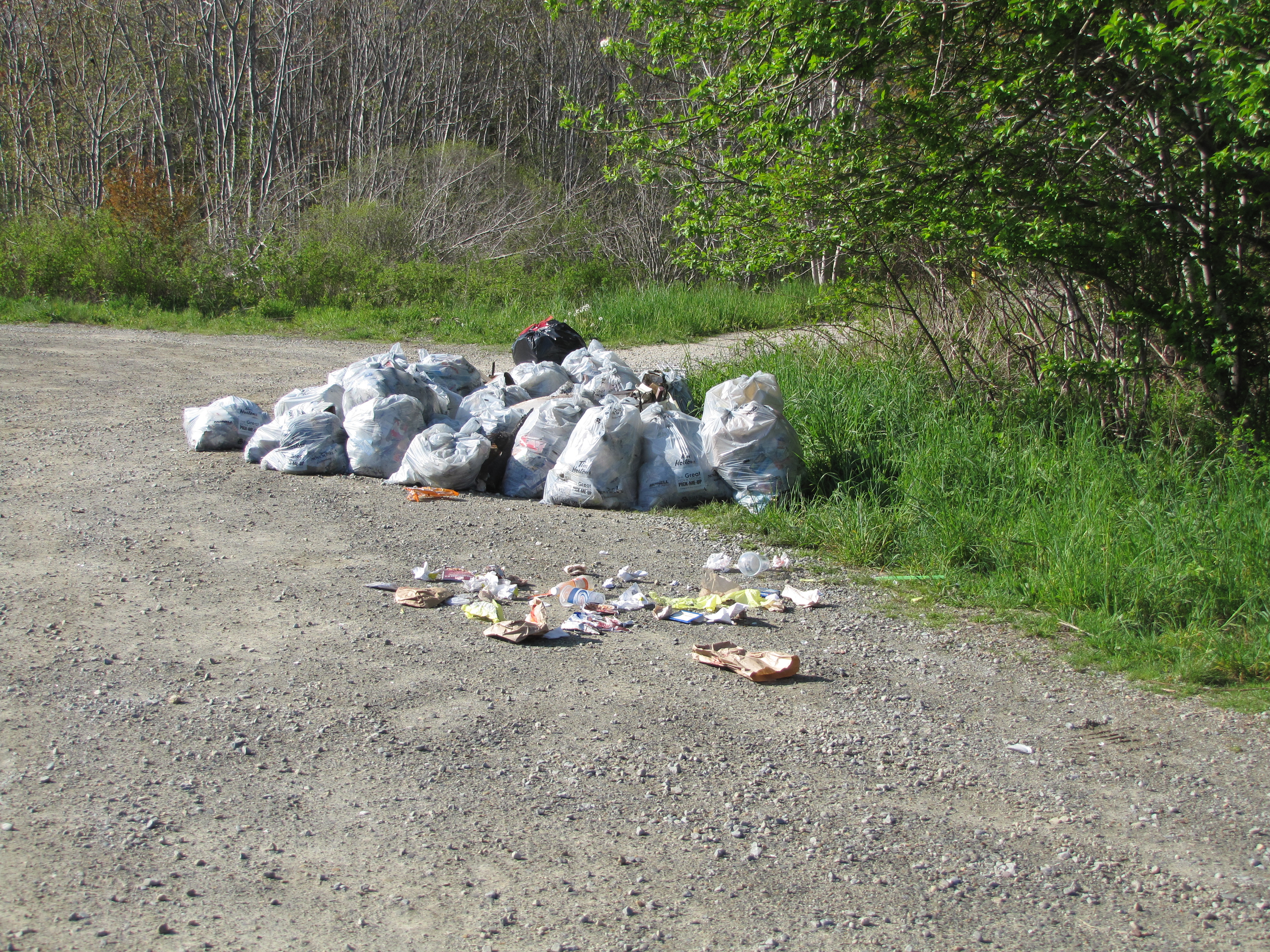 On Saturday, May 19th, the Tusket River Environmental Protection Association (TREPA) did a roadside cleanup for Argyle Municipality. Part of the two kilometres was between the 103 Highway and the old #3 Highway along to Quick’s building. The cleanup was done by a dedicated group of mostly older participants who love our roadsides and landscapes.