Here is an event in which we are sure all TREPA members will be interested. We hope you will join us there.
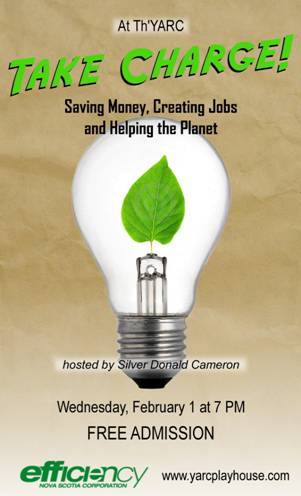
For more information on Silver Donald see:
http://www.thegreeninterview.com/greeninterview
Here is an event in which we are sure all TREPA members will be interested. We hope you will join us there.
For more information on Silver Donald see:
http://www.thegreeninterview.com/greeninterview
Back in 2000, John Terry from Maine and Mil Nickerson worked with Ann Jones, then Superintendent to Schools, and the Millennium Fund to organize the first GOMI youth conference in Yarmouth. GOMI is a program serving youth around the Gulf of Maine with a focus on local issues related to the bigger picture of our common bioregion. Teams, five in the Maritimes work, work on their home projects and meet at yearly Summer Workshop, with teams from New England. At the workshop, the students intermingle on teams and address common issues while getting to know each other. Hundreds of students have moved through the program and those early ones are now involved in productive jobs and raising families. They are not all working on environmental issues but you may be sure they are environmentally sensitive and responsible.
There are three points of access to GOMI news:
www.gulfofmaineinstitute.com is the site for current news and a record of activities including student reports of their experience.
www.gulfofmaineinstitute.org is the site that provides the institutional information about the organization such as charitable status, by-laws, board members and how to support the effort. This site was designed for GOMI by Harold Crosby, a Yarmouth web designer.
Facebook http://www.facebook.com/groups/2232714824/ has a GOMI Group where youth and mentors keep in touch with one another.
We invite you to visit these sites and understanding the mission and the connection to TREPA, making a donation, if you wish, through the gulfofmaineinstitute.org site.
The Draft Coastal Strategy was published through the website www.gov.ns.ca/coast with a request for individuals and organizations to respond to it in preparation for development of a more streamlined and consistent approach to coastal management. TREPA’s response was reviewed by the Board and also shared with members of the Coastal Coalition. The following is the document sent to the Our Coast working group.
Comments of
Tusket River Environmental Protection Association on
Draft Coastal Strategy report
November 2011
This presentation consists of two parts. 1) general comments and, 2) response to the suggested feedback questions. The general comments are directed toward overall conceptual issues while the responses to suggested feedback questions are more specific.
General Comments
Overall: The Draft Coastal Strategy reflects a positive and workable approach to our concerns for development of a viable and enforceable plan for our coastal zone. We are pleased with the approach and the manner in which the work is being conducted and feel that public comment has been reflected in its execution. We intend to be involved in this planning process as it continues to develop.
While the document states that the Government of Nova Scotia is “committed” to taking a “leadership role in developing a more streamlined and consistent approach to coastal management” this statement is quite ‘non-commital’ when it comes to actually getting things done. Warm and fuzzy does not work in Nova Scotia. We would like to see a commitment to coastal zone management legislation with an office and authority under an accountable Minister.
Definition: One of the first things we notice is that the Coastal zone of concern is not defined. It is more than the coastline, the length of which is highly variable depending on the measurement system, and the percentage of people living “in or near it” depends on it being defined as a geographic entity. A case could be made that everyone in Nova Scotia lives near the coast. Our question for the planners/geographers on this is what are the parameters – physical, cultural, economic – that create the area that is considered “coastal” Nova Scotia? Once that is decided, we know what it is that we are planning and regulating as it is impossible to do that with a “coast line”. With our deep bays and harbours and nearshore commercial activity our coastal zone must include both land and water areas.
The Wider Context: This section of the document essentially puts out the message that “the government is creating an ambitious coastal strategy” because “the coastline can and must contribute to sensible, sustainable economic development.” The section does admit that “the coastline continues to be a defining cultural force in Nova Scotia that is home to important cultural and heritage sites.”
Has the strategy of “jobsHere” become the prime driving force of the “coastal strategy?” In reading this section one is reminded of “ship building, ocean container trade, energy production, fishing, aquaculture, natural gas production, national defence, and commercial fishing” as coastal uses with a small mention of “tourism and places to live, work and play.” If the main reason for development of a coastal strategy is that the Government thinks of coast primarily as an economic engine then we think the approach is way off base.
The coastal zone is first and foremost a special environmental entity. It is the most rapidly changing and evolving landscape in Nova Scotia with much of it in flux seen daily, seasonally, or in decades. It has the most varied habitats in the Province with harbours, river mouths, estuaries, marsh complexes, beaches, cliffs, and human development.
The test is this: without us, the coastal zone would do just fine. The waters would be unpolluted, the estuaries would serve their nursery functions, the beaches would move about, the oceans would be plentiful. Storms would come and go, beaches would shift locations, cliffs would erode and all would go on evolving. It is when we enter with human constructions that careful planning is required both to maintain the health of the natural systems and protect our additions.
We would like to see a statement that “the government is creating an ambitious coastal strategy because the coastal zone must maintain its environmental integrity as we place sustainable economic development within it.” That is a balanced and realistic Wider Context. The coastal strategy would then “complement and support the major” environmental and “economic strategies of the government.” (page 5, last paragraph)
Our Guiding Principles: This section, like the previous is deficit on recognition that the environment is the base of the planning activity. As in, “we are already moving forward with a greater awareness of coastal issues and sustainable economic activity.” Let us take just one issue, fisheries. The base of the fishing industry is not boats and harbours. The base of the fisheries industry is fish. If we do not protect fish habitat we will not have a fishery. The limitation on our shellfish industry is pollution of their mudflat habitat, not having more processing plants.
Perhaps sustainability needs to recognize “the relationship between ‘essential’ coastal ecosystems and ‘healty’ economic development” to get our priorities in order.
Seven Key Issues: The issues identified seem to be comprehensive enough to cover the needs of a coastal management plan. They provide a useable list into which issues may be organized. Again, the order reflects the unrealistic bias of the approach. Recognizing the balance needed we would start with the reality of the environmental systems, move on to human use, and end with governance. As:
Coastal ecosystems and habitats: They are there and in place. We need to start with them.
Sea level rise and storm events: “Coastal processes” would probably be a better term as these are only two of the many processes that effect the coastal environment at any moment.
Coastal water quality: This recognizes the need for a productive ecology to support life and leave a bounty for human use.
Public coastal access: Recognizing the basic right of people to have access to the natural resource of our coast as a primary factor in coastal planning.
Coastal development: Need to fit into above setting in a sustainable manner without destroying it.
Working waterfronts: Need to fit into above setting in a sustainable manner without destroying it.
Governance: As a way of making the natural and man-made environments work as a sustainable unit.
Response to Feedback Questions
Do the goals and objectives establish the right overall direction, in terms of developing an effective coastal strategy?
Coastal Development: Management of aquaculture is a particularly sticky issue and needs to be brought forward for specific attention.
Working Waterfronts: Good that it emphasizes mix of industry and community use as they can go quite well together, particularly in urban areas.
Public Coastal Access: Need to emphasize public access to variety of coastal experiences. Getting beyond use of Crown lands there needs to be a program for purchase of critical access points from private land owners.
Sea-Level Rise and Storm Events: We agree that development should be restricted or controlled in high-risk areas. High energy coasts and storm events are a given. They only become “hazards” when development is placed in their path.
Protecting “natural” features is somewhat of a issue as what makes them “natural” is that they do change because of coastal processes. Are we going to stop coastal drumlins from eroding, stop beach form evolution, keep cliff faces from collapsing?
Again, it is not just the big storm events that create change. All coastal processes need to be thought of. It is the slow, day to day change that often causes problems to development.
Coastal Ecosystems and Habitats: Goal is reasonable. Objectives appropriate.
Coastal Water Quality: Goal is reasonable. Objectives appropriate.
Governance: Goal is reasonable. Finding ways to share meaningful information is important objective.
What actions do you think are most likely to achieve the goals and objectives?
Coastal Development: Under “development standards,” thinking about classes of uses, as in traditional zoning would be helpful. Perhaps development on the coast should be restricted to uses that have a good reason to be there. For example, housing takes advantage of view, a good reason for a coastal site. A general purpose warehouse with no need for water access should be somewhere else.
Working Waterfront: Actions seem reasonable.
Public Coastal Access: Yes, a Province wide inventory is necessary. There are actually quite a number of public access points but most are unidentified or not developed enough for parking or safe use. Good examples of public access points exist in Maine and along the Gaspe’ Peninsula coasts. Our lack of access, coastal overlooks, rest stops, toilet facilities, picnic tables is a serious detriment to our tourism industry.
Sea-Level Rise and Storm Events: Actions seem reasonable.
Coastal Ecosystems and Habitats: Thematic mapping of the coastal area is essential to the planning approach. With current technology these maps can be made available to local governments and citizens for appropriate decision making.
Coastal Water Quality: We would like to see more specific actions to deal with aquaculture and shell fish harvest areas. Aquaculture has great potential to be a pollution source and shell fish areas seem to be under serious threat from land based pollution sources.
Governance: Connecting a lead body for coastal management with an ongoing and consistent engagement of people and organizations is a key here. Perhaps an informed citizens advisory group could be a part of the lead body – a Coastal Commission of sorts.
What actions do you think are most important?
We think putting the coastal environment first in emphasis sets the tone for a more balanced approach to coastal zone management. If we don’t start with a sound understanding of the coastal forms and processes, a full inventory of resources, and an appreciation for the dynamic quality of the coastal zone we have no chance of integrating sustainable uses into it.
How can your our your organization help achieve the goals and objectives?
Our organization work in collaboration with others around the coast. We take a comprehensive view with understanding of natural processes and the needs for human use. We have specific knowledge of our area of the Province so can contribute that to an open inventory and mapping system such as Open Green Map that allows public input to thematic maps.
What can the provincial government do to encourage and support your help?
Keeping the approach open and transparent is a big step to encouragement. However, being heard is not necessarily being listened to. So, it is important that results of public input are reflected and reported back to those responding. Keeping groups involved with direct interaction with government staff is also important. In a Province as small as Nova Scotia, one on one contact is still important and it does seem to make a difference.
The entire issue of coastal management needs to be moved to a more prominent level of consideration by the government with higher priority and more specific action plans so that this process does not get drawn out over years when things should be getting done. While the coast is dynamic and ever changing, it should not be moving faster than the governmental mechanisms designed to protect it.
A number of meetings and discussions related to proposed protected areas have been held. As a result, TREPA has developed an updated list from that of August 20th. This is the latest list for consideration and support. The italicized are new.
#53: Bowers Meadow South: endangered Atlantic Coastal Plains Flora
#74: Chebogue Harbour; extensive salt marshes and habitat for migratory shorebirds
#85: Barrington Lake: threatened Tubercled Spikerush, Eleocharis tuberculosa
#102 and #465: Both are adjacent to Crow Neck Beach which has recently been protected by the NS Nature Trust. The trust is still in the process of possibly adding more land to the protected area. Having adjacent protected areas is a bonus.
#114: Dunraven Bog: an important headwater area on the Queens-Shelburne county line
#166: Goose Bay; extensive salt marshes and habitat for migratory shorebirds
#170: Great PubnicoLake; numerous rare Atlantic Coastal Plains flora
# 173: Gridiron Falls. was canoeing there a few days ago and found what I think are either Plymouth Gentians or pink choreopsis on the slice that’s in mid-stream between the run and the other shore. Old growth forest around it. Historic forestry area.
#223: Little River; extensive salt marshes and habitat for migratory shorebirds
#235: The Lower Tusket: will help mitigate impacts from elsewhere in the catchment
#261: Blackadar Brook: should protect a good chunk of Clare, including parts of the Carleton, from further polluting development
#322: Porcupine Lakes: should protect a good chunk of Clare, including parts of the Carleton, from further polluting development
#347: Roseway River: important catchment area.
#348: Round Bay: relatively remote shore; piping plover habitat. Protection from ATV’s? A splendid beach and estuary.
#378: Silver River/ Carrying Road Lakes: important catchment area headwater. Includes New France, an historic site. Intuitively, my first priority.
#379: Sissiboo River: important catchment area
#381 Sloanes Lake: coastal zone flora present; backup water supply for Yarmouth
#402: Swaines Road and Port LaTour Bogs: (endangered Thread-leaved sundew) Drosera filiformis
#417: Tidney River NE: important catchment area headwater
#418: Tidney River NW: important catchment area headwater #421: Indian Fields: important catchment area, for the Roseway
#421: Indian Fields; protection for upper Clyde catchment; rare plants, mainland moose habitat
#422: East Branch Tusket River: important catchment area; minimize impact from nearby past and possible future mining activities
#576: Hectanooga; Eastern white cedar and rare lichens
#553: Inner Spectacle Island; extensive salt marshes and habitat for migratory shorebirds
#553:
#425: Jordan River: important catchment area
#428: Napier River: important catchment area
#441: Tusket Islands: important area for migratory birds; extremely productive marine area, crucial to many fisheries. Several members support this area choice.
#455: Lower Silver River: important catchment area
#465: West Baccaro Bog: (endangered Thread-leaved sundew) Drosera filiformis
#462: Wentworth Lake
#509: Makes an extended wildlife corridor to the protected lands on Purgatory Point.