Wilderness Access
We don’t know where we’re going, but we’re gettin’ there
By Bob Bancroft
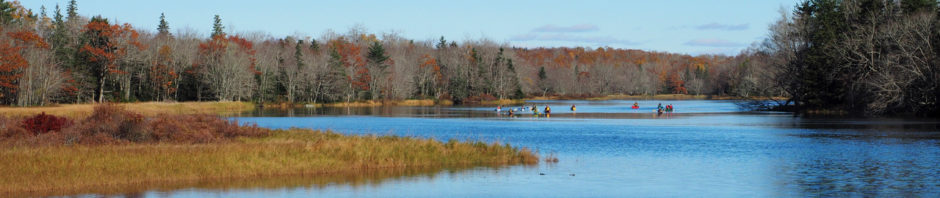
It was a spring day to savour; bright, warm, and free of black flies and mosquitoes. The sun’s first rays saw me underway. After a short drive I left the car parked where trees closed in over an old trail. My map and compass took me south-east and I eventually reached my destination, a 140 acre forested hill untouched by humans. This knob, on an otherwise flat landscape, had escaped the saws and felling axes of the 1800’s and the chainsaws of the next century for one particular reason. It’s flanked by swamps, which makes it extremely difficult to extract timber. After hours of wandering through this island of verdant stands of pine, maples, birches and oaks, I stopped to eat lunch on an ancient fallen hemlock. Checking the map, a small lake several kilometres to the west caught my eye. A few hours later my fly rod was assembled on its shore. A number of red-spotted newts were foraging in the shallows, easy to see in the clear water. Fishing took second place to drinking in the beauty of this quiet place.
A low, rasping whine rose from the west. It stopped, but started again five minutes later. Then again. Each occurrence grew incrementally louder. Finally a six-wheeled motorized bathtub plugged with two overweight men burst through the woods on the opposite shore. Brandishing a chainsaw, one fellow disembarked to fell another tree. The tub then plunged over the bank into the lake. As the outboard began to sputter, one fellow tossed an empty bottle into the lake. Finally noting me on the shore, he exclaimed “How the _ _ _ _ did he get here?”.
It was time to pack up. I grew up enjoying relatively pristine wilderness. Access was by foot and water, and required the gradual development of survival skills.
Chainsaws and snowmobiles were major technical innovations of the 1950’s that boosted access to wilderness. Now global demand for wood products keeps rising with a human population that tops seven billion. Decades of “forest management” catering to corporate interests has left its mark in Nova Scotia. Too much forest flattening, too fast, and for too long is causing many wildlife populations to plummet. The cumulative impacts of many activities on wilderness has made for horrendous change in our lifetimes. Taxpayer-subsidized forestry roads in the 70’s brought new access to woodlands. The road access brought new hunting, angling and trapping opportunities. More pressures were exerted on wildlife populations. Forest habitats and waterways became drastically altered. Roads went in; the wood, fish and wildlife came out.
My friend John had a fly-in camp on a remote lake in eastern Nova Scotia back in the 70’s. There were petroglyphs on one shoreline rock, documenting a history of human visitation. I flew a crew in to survey the lake and its tributaries to determine habitat and fish populations before forestry roads approached. Speckled trout populations were the stuff of dreams. Several years later, construction of a new road rumbled by a mile off to the west. After that John heard a noise one day while in his camp. A fellow appeared on the western shore with a chain saw, then a canoe. That fall John collected 14 cases of empty beer bottles off one point on the lake. The fishing continued until there was nothing to catch.
Forty years ago, North Americans represented about 6% of the world’s human population, and used about 60% of the entire world’s annual output of resources to sustain a lifestyle we consider is normal. We recycle now, but similar consumption continues.
During the eighties four-wheel-drive technology became more refined. A generation that grew up in station wagons began to buy gas-guzzling sport utility vehicles (SUV’s) and pickup trucks. The average showroom vehicle today burns more gasoline than thirty years ago.
The best-selling motorized vehicles for off-road wilderness adventure are personal watercraft (jet skis) and all terrain vehicles (ATV’s). Cranking around lakes like mad hornets on a water-borne mission to nowhere, the two-cycle motor exhaust from two hours of jet skiing is equal to the total smog-forming emissions from a 1998 passenger car operated for about 208,000 kilometres. These watercraft interrupt loon nesting and any pretence other folks might have about quiet relaxation at the lake.
As a fisheries biologist, I have seen the difference that ATV access has brought to remote lakes. Typically there was an old forestry road in disrepair within several kilometres of the lake. From that point (in the 80’s) a walking trail had been cleared by the energetic few who would carry a canoe or simply wanted to hike. After an arduous trek, the balance of the day was spent alone with a refreshing wind and the quiet splendour of water, sky, shoreline and occasional wildlife visitors. The speckled trout had only been lightly fished, so many of them were willing to bite almost any tackle. Returning to one such remote highland lake in the 90’s to scientifically assess the trout population, the path had become a well-beaten ATV track. This is typical. Not surprisingly, the trout population had plummeted.
GPS-equipped ATV owners continue to push into the last remote areas, hacking through woods with little knowledge or concern for private or public ownership. I shudder to think where this process, and the future for wildlife and habitat, is headed. The ecological problems associated with ATV abuse of bogs, waterways, sand dunes and shorelines with endangered species are well known. Snowmobiles and ATV’s can and do interrupt the solitude of sensitive wintering areas for wildlife. I remember when clubs volunteered to find, note and report moose evidence in their travels. They missed the point that in many cases an invasion of motorized off-road vehicles is enough to prompt a moose to move elsewhere. If he or she has the option.
ATV’s can be a year-round wildlife menace in the wrong hands. Wilderness access is a goal of many drivers who seem to consider passage a right. The organized ATV folks are doing their best to educate others, but their efforts have not turned the tide. My travels by foot and canoe in the 1990’s to see the first 31 proposed wilderness areas convinced me that driving by ignorant or unconcerned ATV owners is damaging many of the last vestiges of NS wildlife habitat.
Fish and wildlife populations will shrink further if motorized ground access continues on new lands that the government is proposing to set aside. If their proposal is publically approved, it will provide some measure of protection to 12% of Nova Scotia ‘s total land base.
Conservation should trump personal aspirations for motorized access on remaining wilderness lands. ATV and snowmobile access could hobble conservation and protection measures for Nova Scotia ‘s remaining wildlife populations. Let’s keep some wilderness for nature, by getting there on foot or by water.