On Coastal Policy

Op-Ed in Chronicle-Herald, Saturday June 23, 2012

by Jennifer Graham, coastal co-ordinator, Ecology Action Centre.

Coast is clear, or should be, of unsuitable development

Summertime in Nova Scotia. The many Nova Scotians who love the coast rush there to see what’s new at the water’s edge. I have visited a lot of our coast lately, and I know others will be seeing what I did.

I am amazed by the coastal lots being developed or for sale right now. This spring alone I saw tiny, almost-in-the water lots for sale in places ranging from Purcell’s Cove to Lunenburg. Some of these lots were clearly mostly beach. Or water. Sometimes it’s easy to forget you can’t actually build on an ocean view.

Those who unwittingly buy and build on low-lying, regularly flooded, or highly unstable coastal property are in for unpleasant and expensive problems, with flooding, septic malfunctions, erosion and storm surge damage. We, the taxpayers ultimately pay the rising costs of uninsured property damage and repairing and maintaining nearby infrastructure like roads and electric poles.

And our dynamic, stunning, irreplaceable coast, pays the highest price of all: altered, fragmented, damaged and unable to do all the things a healthy coast does, like provide food and shelter for shorebirds, remove pollutants from water, or provide a barrier against storm damage.

There are plenty of lovely waterfront properties that are high enough, or large enough, or geologically stable enough that they can be profitably and safely developed. Why are people still selling unsuitable lots, despite the harm they cause and the growing risks?

Plain and simple, people sell sketchy coastal property because they can. It is perfectly legal in Nova Scotia to sell lots for development that are currently located in a coastal hazard zone. As for the future, a recent report by the National Round Table on the Environment and the Economy forecasts that sea-level rise and storm surge-related flooding will cost Atlantic Canada between $1 billion and $8 billion annually in the near future.

The ongoing sale and development of hazardous coastal properties occurs because Nova Scotia has not classified any part of its 13,000-kilometre shore as a “coastal zone.” Unless municipalities have designed certain areas as a “coastal hazard zone” or “an ecologically significant zone,” coastal properties are treated exactly like any other parcel of land; although we all know many parts of the coast are prone to flooding, erosion and ongoing change.

The province has been working on a coastal strategy for over five years now. It should be released sometime soon. Those developing the strategy have heard very clearly from the public that the coast, our most precious asset, is fundamental to our collective identity, and that it needs our help and protection. So why is unsuitable coastal development still being encouraged?

The provincial government seems to think that putting fair, consistent and effective rules in place to protect buyers, communities, taxpayers and our amazing coast would be too hard to do, would stall economic development in coastal communities, and would cost too much in a time of heavy cutbacks. So, after five years, the upcoming strategy will likely include more vague commitments to future actions, as did the recently released provincial aquaculture strategy.

The province needs to recognize, as most other coastal jurisdictions already have, that fair and consistent rules don’t have to be complicated and can save money by reducing the current muddle of fragmented regulations and departmental clutter, as well as by eliminating the longer-term costs of unsuitable development.

We need a systematic approach to repair a broken system. Individuals can’t do it by themselves, nor can communities or municipal governments. The reputable investors who want to create safe, minimal-impact developments, economic and recreation opportunities along our spectacular coast can’t fix things by themselves either.

The coast needs our help. The provincial government has to step up and recognize the coast as a significant and special place. It also needs to establish fair, consistent criteria for where new development can safely take place in the coastal zone, and where it cannot. I think calling this new approach the “Nova Scotia Coastal Zone Act” highlights just how significant a healthy coast is to this province’s present and future.

The good news is there is a lot of public support for coastal management. In last fall’s public consultations on a draft coastal strategy, many submissions stressed the need for provincial coastal development regulations. People are ready for change. Let’s call the province on its “head in the sand” approach before the sand washes away, and we’re left gazing bleakly at the wasted opportunity of our once amazing coastline.
 

Posted in Coastal Issues | Comments Off on On Coastal Policy

South Shore Plant and Bird Adventure planned

Look forward to the August 11-12 South Shore Plant and Bird Adventure


This weekend provides two action-packed days looking for endangered birds and plants on Nature Trust properties on the South Shore! Join us for one or both days. On Saturday August 11 we will explore the Jack and Darlene Stone Lands in the Tusket, looking for forest birds and endangered plants, including Plymouth gentian and pink coreopsis flowers, as well as newly found water pennywort and Canada’s only known location of maleberry. On Sunday August 12 we will start our day birding on Crow Neck Beach Conservation Lands to see piping plovers and other shorebirds. In the afternoon, on the same peninsula, we’ll go for a walk in a nearby bog to see one of the only sites that supports the endangered carnivorous thread-leaved sundew plant. 

Please register with Cristi at 425-5263 or cristi@nsnt.ca


Posted in Events | Comments Off on South Shore Plant and Bird Adventure planned

Importance of providing opportunities for youth

In these times when governments are cutting back on support of education and student involvement in summer work experience it is timely to get a reflection by two students who had the opportunity to work with TREPA a number of years ago. Thanks to Mil Nickerson for forwarding this and showing us why we need to keep pushing to support our youth in meaningful environmental work.

What A Job…

As students at Acadia University we were both eligible for the Student Loans Economical Renewal Program. The program is open to students with student loans to offer experience in their field of study. Students are expected to approach potential non-profit organizations that could provide valuable experience in relation to their studies.

Both being Biology students, from the area, with concerns about the future of our environment, TREPA was an obvious first choice. In April we met with TREPA members and discovered that we could provide valuable resources to each other. TREPA experience relevant to our biology careers and we could provide fresh ideas for future work.

The first adventure we incountered was studying the Gaspreau that migrated through our water systems ( focusing on the Tusket River ). Our purpose was to average the Gaspreau population as well as focusing on related factors, such as sex, weight and age. Several specimens were collected daily at which time their lenghth, weight and sex were recorded. Scales of each specimen were collected and mounted on slides, which would later be used to determine the age of the fish. At the ladder a count was preformed each hour ( from 9-5 ) for 15 min., at this time air, water temperature and weather conditions were also recorded.

This would provide an estimate of the population size as well as any migration patterns. We studied the Gaspreau until the end of June when their migration stopped, at this time we started to study the American Eel ( elvers ).

The Department of Fisheries and Oceans provided the Nova Scotia Power Corporation with traps that would collect the young Americian eels, elvers. Elvers are the baby Americian eels returning from the ocean and entering our lakes and streams. The purpose of the traps was to determine whether or not an eel ladder had to be built to provide the eel’s with passage around the dam.

There were two traps at differend positions to determine the best location of the ladder. The eels were collected, counted, and sampled from each trap and then were released in Vaughan Lake. In May we accepted an invitation to the East Kemptville Tin Mine site and surrounding areas to work with four BEAK Enviormental specialists on a Bio- assement of the area for Rio algom. At this time we were able to experiment different techniques used to assess this ecosystem. Such techniques including PH and dissolved oxygen reading, Electrofishing, collectiing and siftimg sediment samples and collecting wildlife sample.

In mid July we packed up and went to Digby Neck for three days. There we joined Gini Proulx, Ruth Newell, and Carol Jacquard t0 survey local bogs for Golden Crest ( Lophiola aurea) and other rare plants. On this endevour we became aquanited with common bog plants and names ( both scientific and common) Upon visiting a site we discovered Golden Crest and recorded it’s Geographic location, associated flora, colony size and population. While revisiting a new Golden Crest site we also discovered Mountain avens ( Geum peckii) a plant that was recorded in Canada as only existing on Brier Island.

Other projects that we were involved with included map work and developement of a coastal plains flora bibliography for Department of Natural Resources, recording salmon collection data from Tusket Dam and powerhouse traps, pH water samples of certain water systems in Yarmouth county, observation and exploration of Barrio clearcuts and locating piping plover’s nests in Shelburne county.

As you can tell we had an exciting and eventful summer. At times it was difficult to distinguish if we were actually working or playing. One things for certain we experienced and obtained more knowledge than we thought possible in four short months. The people we’ve met and the experiences shared will stay with us forever. We would like to thank all TREPA members for giving us the opportunity to gain hands on experience in the work force. Special thanks to Patrick Patten for putting up with us on a daily basis and to Mil Nickerson who always insisted we do our work but  above all else make sure we had fun, there’s no doubt…WE DID!!

Thank You TREPA,

Susan Aresenault and Jemie Lent

Posted in For the Record | Comments Off on Importance of providing opportunities for youth

Field trip opportunity

The Nova Sscotia Wild Flora Society and the Newfoundland Wildflower Society will have a joint field trip to our area August 8-11, 2012 to see our Coastal Plain Flora. Details are posted on their web site www.NSWildFlora.Ca.  They welcome any of our members who may wish to join join them, especially the Gilfillan Lake site visit. You may contact them through the website any time. They would like to know if anyone is interested so if you are please let them know.

Arrangements for meeting places and car pooling will be made as we get closer to the date of the event.

Posted in Events | Comments Off on Field trip opportunity

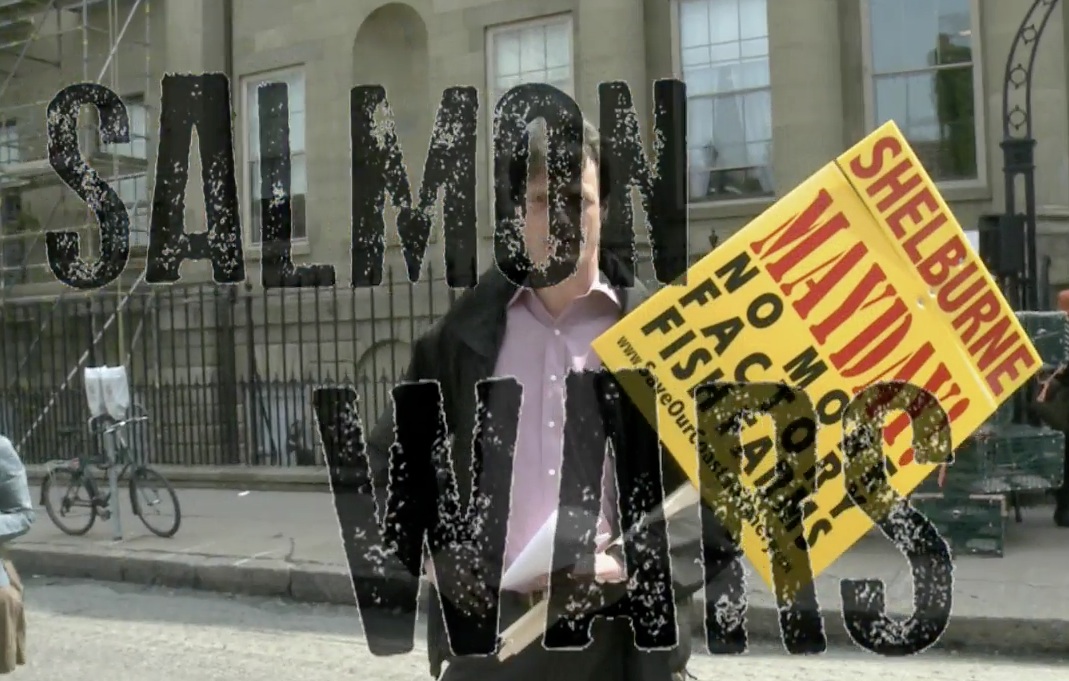
Salmon Wars continued

In case you missed the documentary, you can download and watch at your leisure. Get it at http://www.salmonwars.com. It is an extraordinary production. Besides the good coverage of environmental issues it also points out that development of the industry and its losses are covered by your taxes. That is, if it had to exist on its own merits it probably would not make it. The next time you shop for fish – ask where the Salmon came from.

We have great local alternatives caught by local fishermen. Support them! And, look for the TREPA banner at the end of the film. Better not blink.

Posted in Aquaculture | Comments Off on Salmon Wars continued