Gov’t seeks more input to coastal strategy development

By DAVID JACKSON Provincial Reporter, Tuesday, November 23 – 4:53 AM

Nova Scotia wants more public input before it creates a coastal strategy.

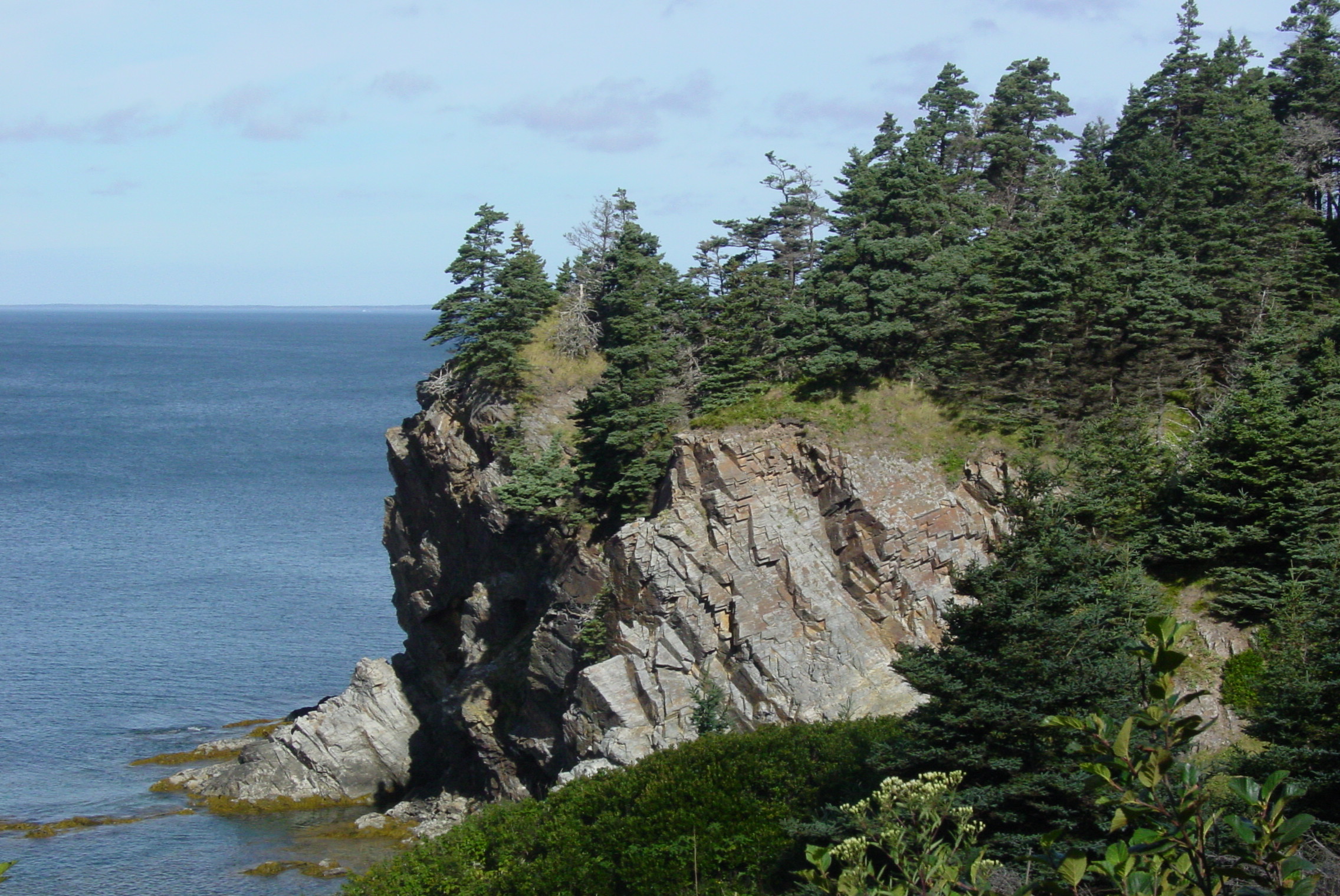
photo: Beverley Ware

The province wants to hear from the public again before creating its coastal strategy.

A report on the first round of consultation, which included input from more than 1,200 people, was released Monday.

Fisheries and Aquaculture Minister Sterling Belliveau said there was a strong message that people wanted to see the latest report and respond to it.

Citizens will have their chance in the spring.

Belliveau said the new target for having a final strategy ready is the fall of 2011 rather than by the end of this year.

“We have to take the time to do it right, not to do it quickly, but take the time to do it right.”

A couple of major topics in the report were the patchwork of zoning laws from municipality to municipality and the need to prepare for rising sea levels, he said.

The report, called What We Heard, said a common response from people was that governance of the coast was inefficient and ambiguous, often due to the many agencies with some jurisdiction in the coastal zone.

Respondents wanted the province to take the lead on integrated coastal management and want all levels of government to streamline laws and policies.

There was also a lot of concern about development along coastlines, which can lead to reduced public access, damage to coastal ecosystems and put developments in the way of frequent severe storms.

What We Heard can be found at www.gov.ns.ca/coast.

Posted in Coastal Issues, For the Record, Public Participation | Comments Off on Gov’t seeks more input to coastal strategy development

Coastal “What we Heard” report ready

Hi TREPA members and supporters:

At last, some positive news!  The “What we Heard Report”, based on last summers’ public consultations, was released on November 22nd, and it is pretty good.  In fact, it is clear that they heard us on the importance of governance reform. Land use planning, buffer zones, and role of communities and municipalities are clearly reflected, as is the fact that many people  think that aquaculture and tidal power need to be included. They have also formally committed to some public consultations on the draft strategy. They have used many of  thoughts and words suggested by the Coastal Coalition.  All in all, progress is being  made.   You can download the report (along with summaries of the open houses and the multistakeholder forum) at http://gov.ns.ca/coast

Posted in Coastal Issues, Public Participation | Comments Off on Coastal “What we Heard” report ready

Aquaculture alternatives

Fish farm boasts sustainability

This reprint from the Chronicle-Herald provides an approach to aquaculture that seems sustainable and environmentally sound. It is a land based operation.

Hants County firm markets European sea bass from land based operation

Fri, Nov 19, 2010 By BRUCE ERSKINE Business Reporter berskine@herald.ca)

A Hants County aquaculture operation is set to market North America’s first sustainably grown European sea bass. “We’re giving the fish an optimal environment,” Jeremy Lee, president of Sustainable Fish Farming Canada Ltd. in Centre Burlington, said Thursday in an interview. “We re-create the natural environment by the controls of our system.”

The land-based fish farm known as Sustainable Blue is on 22 hectares of woodland near Windsor. It uses proprietary technology developed in England by Lee, a native of the United Kingdom, to clean, recycle and regulate 500 metric tonnes of water per hour to strict tolerances. “We go out of our way to farm sustainably.” Lee said all the operation’s incoming water is sterilized and all the organic waste from the fish is collected and held on land. “We don’t discharge effluent.” The organic material will be used as fertilizer.

The contained aquaculture operation has no impact on the marine environment, which has become something of a regional issue with the outbreak of sea lice in salmon farmed in cages off the New Brunswick coast. Lee wouldn’t comment on the sea lice problem specifically, but he said his firm’s technology keeps its fish disease-free without using chemicals or drugs. “We don’t have sea lice or any other diseases in our farms.”

Lee said he and his partners decided to establish the business in Nova Scotia because of the tremendous potential of the North American market, which has become increasingly interested in sustainable local foods. “We can grow sea bass that others can’t.” He said the firmly textured, mildly flavoured fish, also known as Mediterranean sea bass, is popular in Europe. “It’s a good eating fish.”

The company operates nine tanks that can produce 60 to 100 metric tonnes of fish per year. The business has been under development for 18 months and has been raising fish for the past year.”We’re just coming to market now.” Lee said the primary markets for the fish are restaurants and hotels. The operation has four employees, with plans to add two more.

The venture has received tremendous support from local business people such as Michael Howell, the well-known chef-owner of Tempest restaurant in Wolfville. “It plays to all his principles — good quality, local, sustainable,” said Lee. Howell said European sea bass was one of the first fish he cooked while training as a chef in Chicago more than 17 years ago. “I fell in love with it,” he said in an interview Thursday. “I’ve cooked with it a long time.”Howell said farmed sea bass can have a muddy flavour, but he described the Hants County fish, which will be on his menu soon, as beautiful. “It has a pristinely sweet flavour.”

The aquaculture operation has also received support from the province in the form of a $1.45-million loan through the Economic and Rural Development Department. “The atmosphere here is very good,” said Lee.He said he hopes to see the business, which is conducting striped bass trials, sustain itself and grow.
Posted in Aquaculture, Coastal Issues, For the Record | Comments Off on Aquaculture alternatives

Forest rally recorded

Here’s a link to videos taken of some of the speakers at the forest rally.  If you couldn’t make it to the rally, here’s a chance to check out what some had to say, Minister MacDonell included.  Thanks to Richard Bell of the Eastern Shore Forest Watch for putting this together.

http://www.forestwatch.ca/

Also, here’s a superb photo album from the day, thanks to Dan Hutt: http://www.flickr.com/photos/dannyhutt/sets/72157625160034325/

Posted in Forestry Issues | Comments Off on Forest rally recorded

Flooding / clearcutting connection?

By RALPH SURETTE  in the Halifax, NS, Chronicle-Herald

Sat, Nov 13 – 2:27 PM

I was playing pool with some buddies in Carl’s shed in Tusket on Tuesday night, when Gordon said, “What’s that rumble — is that a big truck?” We checked the window. No truck.

A few minutes later, Eddie got a call. His face went stiff and his eyes darted. The Tusket bridge, a half kilometre upstream, had collapsed.

What!? When we arrived, there was a lineup of cars plus a large flatbed truck with a road machine on board — all within minutes of crossing the ill-fated structure.

While we absorbed the shock of something that was such a solid part of the landscape for a century being gone in a minute — Premier Darrell Dexter would call it “incomprehensible” the next day, an apt word — the question arose as to whether there had been anyone on the bridge, now washed down the dark and ferocious turbulence.

No one was, and that part of it, at least, ended happily, if not miraculously.

After a storm wiped out a much smaller bridge and cut off Meat Cove at the opposite tip of the province in September, not to mention the extra damage in Yarmouth County and beyond now, the rest of it is not so happy. How far does the whole story extend?

In fact, finishing our game back at Carl’s, when the conversation resumed it wasn’t about the collapsed bridge, but about a bigger one downriver that’s been the subject of macabre joking among us for some time — as to whether the boys would make it back for another round of pool or not.

Half the gang come from Surette’s Island, place of my distant relatives. It’s attached to the mainland by a one-lane steel truss-and-suspension bridge twice as long as the collapsed one — nearly 200 metres in three spans over a tidal sluice. It was a local marvel when built in 1908. But now?

Along with everybody else in Surette’s Island, and the community of Morris Island which is attached to it by a small bridge, my friend Warren (Surette — need you ask?), a welder by trade, has been fretting about it for years.

He’s peeled off thick slabs of rust by the fistful, rattled the old railing that’s coming loose, listened to the whole thing shake as heavy equipment goes through, wondered how long the old iron can take it and muttered more than once: “If something happens, I hope it’s not to a school bus.”

If something happens, unlike Tusket which has a handy detour, some 250 people would be completely cut off.

The province is working on it. The plan is for a new bridge in 2012 — but with a policy condition that keeps locals skeptical: “If the money can be found.” It won’t be cheap — in the vicinity of $10 million.

Transport Department engineers have checked it and declared it sound. But the Tusket bridge was checked and looked sound hours before it collapsed. As we left, Billy quipped: “J’ai peur de m’en aller”— I’m afraid to go home (over the bridge). This time, I wasn’t sure he was joking.

Antique infrastructure and worsening conditions. The province has two big policies about to come out that relate to this —one on transportation infrastructure, another on forestry and natural resources, plus another in the works on coastal protection.

The last one first. As far as I’m concerned, the massive clearcutting in the interior has contributed to the ferocity of the flooding.

If you’ve ever cruised the interior clearcuts in Nova Scotia, wherever it’s hilly, the roads are a mess of washed-out ditches and culverts, as clearcuts hold little water and water flushes down in spate.

Washed-out bridges and highways are the downstream version of that. If the new forest policy has nothing on that, I suggest they crank it back and find something to say.

Meanwhile, I’ve been waiting for the transportation policy for different reasons. The plan is to put highways and bridge work on a scientific footing.

Money is to go where it’s needed according to certain norms rather than according to political influence.

Since corrupt roads politics goes back to the British founding of Nova Scotia, and almost resulted in the removal of a sitting premier as little as 15 years ago — grassroots Liberals were furious as John Savage refused to fire Tory foremen on highways work when he took office — highways work is at the symbolic core of the meaning of the NDP overthrow of the old party system.

Such a policy, if accepted by the public, would help advance the cause of confidence in our politics.

My buddies, for example, tend to believe that if their bridge was in Cape Breton, it would be replaced by now. In keeping with general western Nova Scotia opinion, the notion is that we don’t protest loudly enough down this way and get less.

Yet, even if the transportation policy was about to even all that out, it too may be outdated even before it comes out because of the ferocity and frequency of storms, not to mention the higher tides (there was damage from those too in the recent storm), all related to global warming — deniers and conspiracy nuts to the contrary.

The new question is: What new standards of construction do you apply if you’re going to assume that you’re building something, like the Surette’s Island bridge or even the doomed Tusket bridge, that’s going to last a century?

Meanwhile, my other buddy Darrell, getting a helicopter view and facing a new reality, seemed shell-shocked by it all — no doubt thinking of the 550 or so other bridges in the province, many of them antiques, how much climate mayhem is yet to come, and how much it’s going to cost.

Questions for all of us.
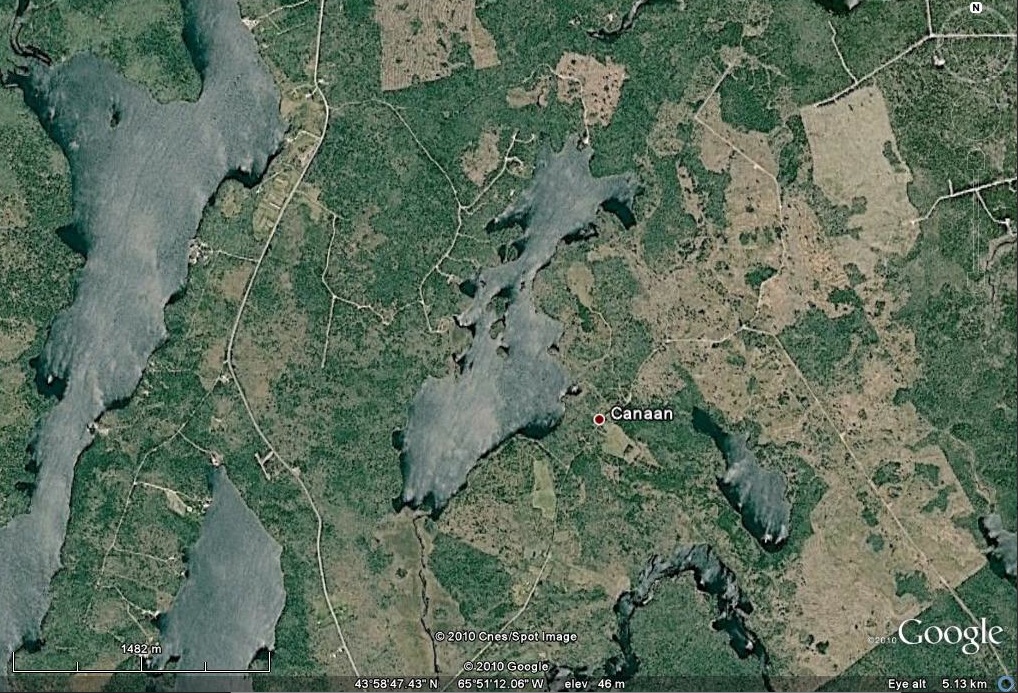
Clearcuts near Canaan in the Tusket River watershed
Posted in For the Record, Forestry Issues | Comments Off on Flooding / clearcutting connection?