Bay of Fundy link added

We have added a link to the Bay of Fundy blog that provides images, news and opinion specifically related to the Bay of Fundy. The current post concerns the escape of 33,000 farmed salmon into the wild stocks of New Brunswick. You may visit the post at:

http://fundytides.blogspot.com

This site is also on our permanent blog roll listed at the bottom of the right column.

Posted in Aquaculture, General Information | Comments Off on Bay of Fundy link added

Case for Coastal Act presented

The following is the case for a Nova Scotia Coastal Act as prepared  by the Coastal Coalition.

Nova Scotia needs a Coastal Act
“Our coastal areas are essential to our economy, our environment and our heritage.”
Speech from the Throne, Nova Scotia Legislature, November 22, 2007

Nova Scotia is a coastal province.

Our current tourism slogan is: “Shaped by the Sea / Façonnée par la mer”.  Our license plates read “Canada’s Ocean Playground”. The coast is where it all happens in Nova Scotia. It is difficult to imagine any activity or business in this Province that does not in some way involve the coast, whether it’s the import and export of goods through a port, access to ocean resources, or our lifestyle.

But our coasts are under stress.  Our patterns of use are changing.  New developments and industries are putting increasing pressure on the coastal ecosystems that sustain our environment and our economy.  New and growing industries like tidal power, land and water-based wind generation, and aquaculture are having a significant impact and competing with traditional livelihoods.  Increased residential development is challenging public access, and climate change is causing more frequent and more severe storms.  Rising sea levels, conservatively estimated at 2 meters or more within a hundred years, already threaten coastal homes and infrastructure and will definitely cause more erosion and more flooding year by year.  Yet unmanaged development continues in the coastal zone with no clear authority, no coordinated planning, and no intelligent response to protecting this vital resource.

We need to start now making strategic and sustainable choices to protect our coasts.

The major barrier to improved coastal management is jurisdictional and departmental confusion – legislative clutter at all three levels of government.  Everyone agrees – reform is needed now.

For a decade or more government has been examining how we manage our coasts.  In recent years, numerous policy documents have called for change.  In its 2007 White’s Point Quarry report, in its 2008 Coastal Management Framework, in its 2009 State of the Coast Report, in its 2009 background paper on Marine Renewable Energy, and now in its Sustainable Coastal Development Strategy, a document due sometime in 2011, the Nova Scotia government has repeatedly noted the need for governance reform.  But, while the storms rage and inappropriate development continues in the coastal zone, progress has been slow.

Clearly, reform cannot be left to government.  It is up to us, the people, to take the lead. To drive the agenda, to address the issues, to achieve consensus and realize a better system of coastal management today, not tomorrow, a rapidly growing coalition of committed organizations, businesses, and citizens has formed – the Nova Scotia Coastal Coalition.  We have a common purpose – the creation of a Coastal Act for Nova Scotia. We look forward to your participation in this dialogue, sharing our ideas and incorporating your point of view.

We propose coastal legislation for Nova Scotia with clear objectives which include a commitment to manage the coast as a dynamic, living system rather than a series of isolated issues.

Why?

  • The health of our coastal ecosystems is of fundamental importance to our environment, our economy, and our way of life,
  • We must be able to make rational, transparent, consistent, and timely coastal decisions that reflect Nova Scotians’ coastal consensus.
  • We must have the tools to both avoid conflict and solve differences effectively when they arise.
  • Communities and individuals can and must play a substantive role in designing our coastal future.

What we propose that’s different?

  • We want laws that require and enable action and accountability, not policy that can shift with future governments.
  • We want laws that govern private, public, and commercial use of coastal lands and waters; like laws on aquaculture, energy projects, residential development, and land use planning.  We do not want a piecemeal, compartmentalized approach, but rather a comprehensive Coastal Act with a single, lead government department where the buck stops.

What might a Coastal Act look like?
There are various options for clarifying governance and identifying appropriate uses and activities for the coastal zone. For example:

  • consistent province-wide land use standards, like setbacks and elevations, sewage and run-off, and incentives for municipalities to develop coast-sensitive by-laws and zoning.
  • strategic environmental assessments to select appropriate sites for coastal industries on land and in the water
  • Establishing multi-stakeholder coastal development advisory boards involving communities and all three levels of government to ensure a coordinated response to development proposals
  • amendments to existing legislation; e.g., the Beaches Act; Environmental Goals and Sustainable Prosperity Act (EGSPA); Statement of Provincial Interest (SPI) under the Municipal Act;  etc.
  • targets for acquiring coastal lands for protection and public access
  • obligation to provide information to the public about proposed coastal activities and projects
  • mechanisms to ensure ongoing research, monitoring, information and education
  • identification of  a single lead department responsible for coastal issues.

Who would benefit from a Coastal Act?

  • Communities…can be involved at the beginning not the end of decision-making processes.
  • Municipalities…can benefit from provincial standards and incentives not be played off against each with inconsistent standards.
  • Aboriginal groups…will be consulted in the development of long term strategies that will protect their coastal livelihoods and rights to resources.
  • Businesses and investors…will have greater certainty in project development, can enhance our coasts while benefiting their bottom line, instead of being thwarted by costly community conflict late in the game.
  • Tourism industry…can attract visitors thanks to our continued fantastic coastal experience.
  • Coastal residents…will benefit from sustainable livelihoods and lifestyle and on-going protection of their property.
  • The coastal environment…will be protected and natural shoreline processes remain intact so nature itself can adapt to rising sea levels, habitat can be preserved, and serve the coastal ecosystem.
  • All Nova Scotians… will be guaranteed coastal access.
  • All Nova Scotians… will benefit from the fruits of effective long term planning which anticipates the impacts of climate change and builds a strong coastal.
  • All Nova Scotians …will be engaged in shaping their Province as it also is shaped by the sea.

Legislation isn’t everything. Dialogue with the federal government and Aboriginal peoples, broad policy development and research, and the adjustment of expectations based on new evidence are important counterparts to a Coastal Act for Nova Scotia.

The Coastal Coalition of Nova Scotia recognizes that a new law cannot impose unreasonable regulatory costs or ill-defined obligations on government, businesses or investors. However, we firmly believe that a Coastal Act can put in place a transparent basis for decision-making that values and protects ecosystems while producing economic benefit for all.

Posted in Coastal Issues, For the Record | Comments Off on Case for Coastal Act presented

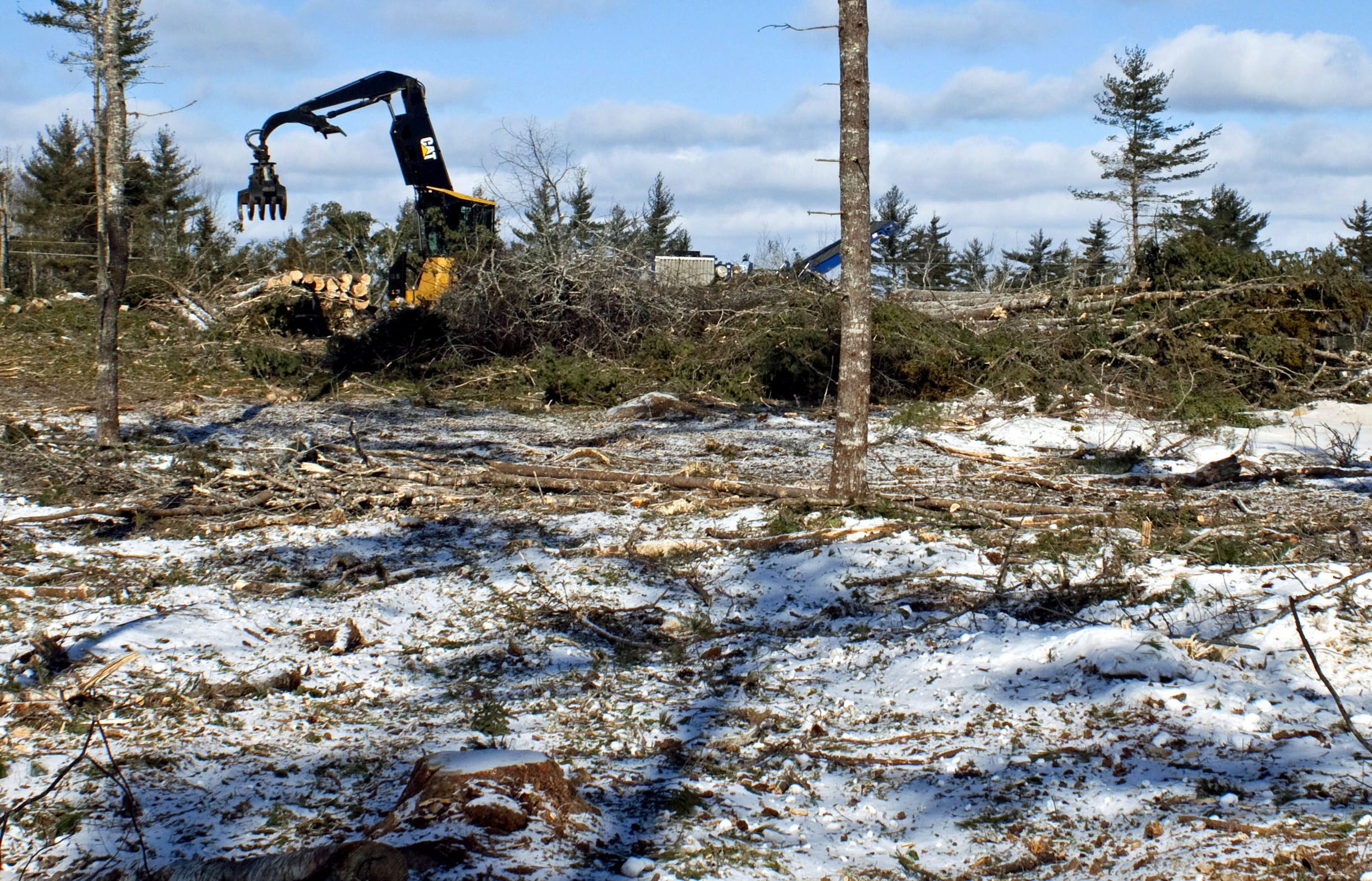
Clearcut near Big Indian Lake

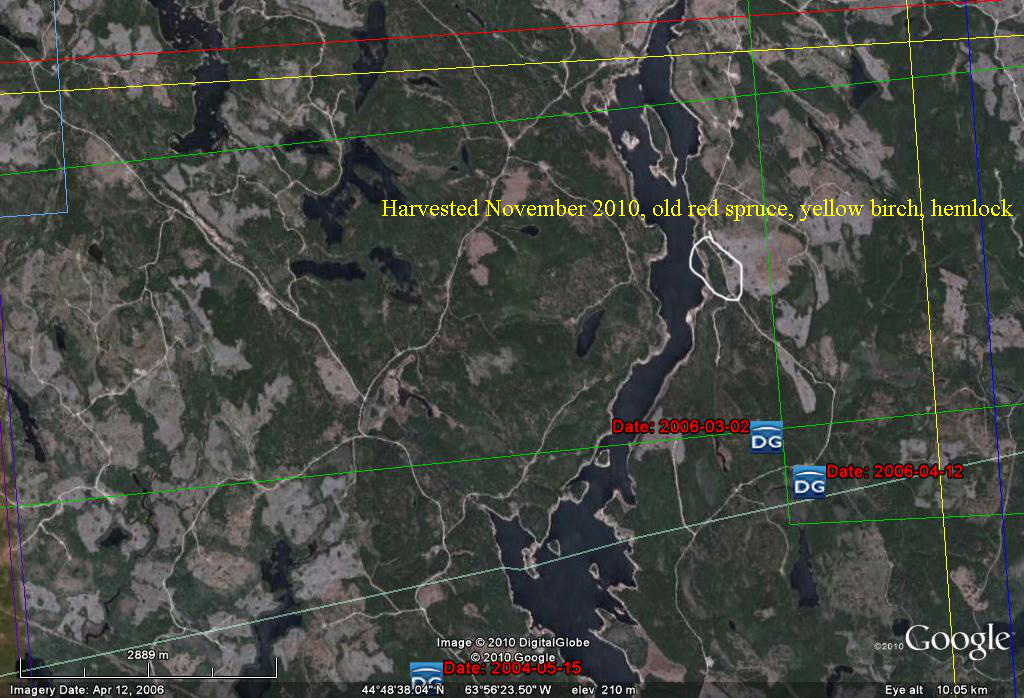
Here are a couple of photographs of clear cutting near Big Indian Lake. Notice the roads and amount of area that has been cut. Clear cutting exposes the forest soil layer to tremendous stress as it compacts, erodes, bakes in the sun, and loses its humus content. The soil is one of the most import aspect of the forest environment and it takes centuries to develop. It ain’t just dirt.


Posted in For the Record, Forestry Issues | Comments Off on Clearcut near Big Indian Lake

Print post feature added

Have you wished you could easily copy our TREPA posts in an attractive format for wall posting or making copies for others? Now you can do that. If you click on the little joliprint icon at the bottom of this post it will generate a pdf file of just this post in an attractive format with the TREPA heading. This works for all posts and pages on our website.

Posted in General Information | Comments Off on Print post feature added

Climate change and insurance

Believe what you want about climate change, but when the insurance industry starts to take notice you know something is up, including your insurance rates. Insurance is a statistical, probability, game and the insurance companies don’t like to lose. And, we don’t want them too as we need our policies to pay  if disaster strikes. The following article is well timed and well stated.

Learning to adapt as climate changes

Chronicle-Herald. December 2, 2010
By DON FORGERON, President & CEO, Insurance Bureau of Canada.

Having been born and raised in Nova Scotia and, until fairly recently, a life-long resident, it was difficult to see the homes of my former neighbours underwater following torrential rainstorms last month.

Nova Scotians have been experiencing, first hand, the damaging effects of extreme precipitation resulting from our changing climate. The increased frequency and severity of these punishing storms have inspired insurers to take action to find ways to make communities across the country more resilient.

Water is a priority issue for the insurance industry. Heavy rainstorms, melting snow, overflowing rivers and tidal surges are all growing concerns for consumers, businesses and governments, too.

In recent media reports associated with the flooding in western Nova Scotia, Premier Darrell Dexter acknowledged that the province’s roads, bridges and other infrastructure may need to be built to a new standard to withstand more frequent severe weather. He’s right.

Property damage caused by severe weather is becoming more common, and it’s increasingly extensive and expensive. Worldwide, insurers have seen a 2,000 per cent increase in disaster claim payouts since the 1970s. In Canada, home, car and business insurers have seen extreme weather payouts more than double every five to 10 years since the 1980s.

Severe weather is increasingly a fact of life and Canadians would be wise to recognize the need to adapt to it. We need to invest more in public outreach on the issue and create incentives for municipalities and homeowners to make their communities and houses more resilient.

Many Canadian communities are already getting creative when it comes to adapting to the increased potential of future flooding: from using parks for deliberate flood storage, to drawing on vegetation to purify wastewater, to the no-brainer of limiting new construction in areas prone to flooding. We need even more of this type of thinking.
After disasters, insurers help communities rebuild and recover. But insurers also help before disaster strikes. Given the real threat of climate change and the severe weather it brings, insurers are developing strategies and working with government partners to find ways to build more resilient communities and avoid these disasters in the first place.

Infrastructure failure is to blame for most damage resulting from severe weather, and Canada’s sewage and surface water infrastructure is simply unable to cope with such increased precipitation, as Premier Dexter noted in the aftermath of the recent flooding. However, knowing exactly what needs to be fixed, and where and how to allocate scarce resources, can be a problem — one that Insurance Bureau of Canada (IBC) hopes to help solve. So we are developing a risk-assessment mechanism that will help communities pinpoint vulnerabilities in their water and sewer system infrastructure. This ground-breaking tool will be the first of its kind in the world.

Individual citizens also have a huge role to play in deciding how to adapt to the effects of climate change. A common sight when I was growing up in Cape Breton was the lowly rain barrel, something that’s making a welcome comeback as homeowners recognize its ability to reduce the amount of water that pours into sewers (and basements!) during rainstorms. Other options for homeowners include sewer back-up valves, permeable driveways, and ensuring that lawns are graded away from houses.

While much about the effects of climate change are uncertain, these things are clear: Investments made by communities to improve their infrastructure and introduce mechanisms to control water flow will help to minimize damage when severe weather hits. And homeowners will suffer less damage to their properties and belongings when they introduce adaptive measures.

Through commitment from all stakeholders — the private sector, all levels of government, homeowners and others — we can work together to ensure our communities are resilient in the face of our new climate reality.
Posted in Climate Change, For the Record | Comments Off on Climate change and insurance